

Dice Games for Addition & Multiplication
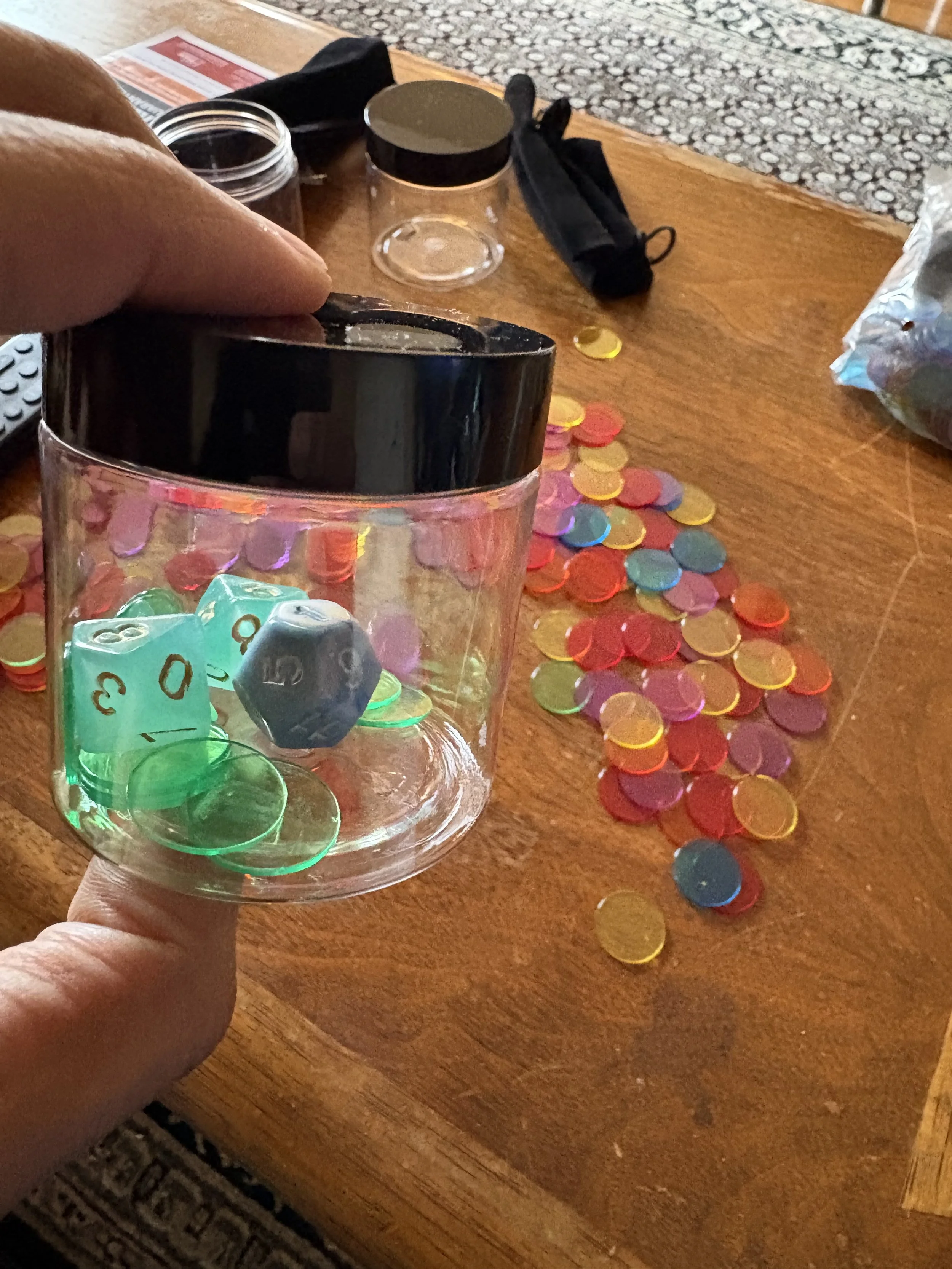
A set of game dice
Adults want kids to learn. Kids want to have fun. Why not combine them both in this fun dice? That’s one of our strategies for helping kids master the foundational skills of addition and multiplication.
There will be a video coming soon to show how to play some of these games. For now, here’s some written directions.
Dice Game
Set up: Pick two dice to play with. For example, two 10-sided dice.
» » Give each player five markers or five playing cards.
» » Before beginning, decide if the operation you are going to use is addition or multiplication.
First Roll: Pick one player to roll the two dice, then roll them.
Winning a Turn: The first player to calculate the answer shown on the two dice wins that term.
» » For example: if you are practicing multiplication and the two dice show a 5 and a 2, the first person to call out 10 wins.
» » If you are practicing addition, and the two dice show a 4 and a 3, the first person to call out 7 wins.Keeping Score: The person who calls out the correct anwer first takes one marker from the other person. Then they give the dice to the other player to roll for the next turn.
Wrong Answers: If a player calls out a wrong answer, then they have to give two markers to the other player.
Ties: If both players agree that they called the answer out at about the same time, then the winner is determined by playing rock-paper-scissors.
End Game: The game ends when either player has no markers left. The winner is the player with all the markers.
Variations:
Single Number-Fact Play: If you want to practice a single number fact, say multiplication by two. Place one die showing a 2. Then both players take turns spinning the other die. The correct answer will be 2 times whatever number shows on the other die.
Handicap Play: If one player is substantially quicker than the other player, to keep the game interesting, the better player can agree to tap a certain number of times before calling out the answer. If the slower player calls the answer out before the agreed-upon number of taps, that player wins. Once the taps are over, the quicker player can call out the answer. If they do so first, they win that turn.
Varying Hardness:
» » For Beginning Players: Using the 4-sided die in company with a 10-sided die makesa nice game because they only have to know their number fracts for 1 through 4, not all ten.
» » For Advanced Players: Using the 12-sided die in company with a 10-sided die makes a more challenging game because then they have to know their number facts all the way up to 12.